Quick answer
Kalonji (black seed) oil is a traditional, nourishing oil long valued in Pakistani homes. Research on its effect on hair is still small, so use it as part of a regular oiling routine rather than as a cure. Always dilute it, about 1 part kalonji oil to 3 or 4 parts coconut, olive or almond oil, patch test first, massage for 5 minutes, leave it for 1 to 2 hours or overnight and wash it out, 2 to 3 times a week.
Kalonji is in almost every Pakistani kitchen. We sprinkle the small black seeds on naan, add them to achar and use them in pakoras and daal. Many families also keep a bottle of kalonji ka tel at home, and it shows up on the label of more and more hair oils. You may have seen it called black seed oil, nigella oil or habbatus sauda.
So is kalonji oil good for hair? How should you use it, and how is it different from the many “kalonji hair oils” sold online? This guide covers what kalonji is, how it has been used, what research does and does not say, how to use it safely on your scalp, simple home recipes, and how to choose a kalonji hair oil in Pakistan.
What is kalonji?
Kalonji is the seed of Nigella sativa, a small flowering plant. The seeds are black, sharp edged and slightly bitter, with a smoky, oniony taste. In English the seeds are called black seed, black cumin or nigella. They are sometimes confused with onion seeds or with black sesame seeds, but they are a different plant.
Kalonji oil is pressed from these seeds. Good quality, cold pressed kalonji oil is dark amber to brown, with a strong, peppery smell and a slightly bitter taste. The strong smell is normal and is one reason many people prefer it in a blend rather than on its own.
Kalonji in our tradition
Kalonji has a special place in Muslim homes across Pakistan. A well known hadith describes the black seed as a remedy for many illnesses, and for this reason many families value it highly and keep it at home. It has also been used for centuries in Unani (tibb) practice and in desi home remedies, both as food and on the skin and hair.
For hair, kalonji oil has traditionally been massaged into the scalp, often mixed with coconut, olive or mustard oil, for dry scalp, dull hair and as part of a regular oiling routine.
What does research say about kalonji oil for hair?
Kalonji oil contains a natural compound called thymoquinone, as well as healthy fatty acids. These have been widely studied, mostly in laboratories and animals, for their antioxidant and soothing properties. A small number of studies have looked at hair, often using kalonji oil mixed with other ingredients, and some reported that people noticed less hair shedding.
But it is important to be honest: these studies are small, and there is not yet strong evidence from large, well designed studies on people that kalonji oil on its own grows new hair or treats a medical hair loss condition. What we can say is that kalonji oil is a rich, nourishing oil that many people enjoy using as part of a scalp massage routine, and that massage and regular oiling themselves help keep the scalp and hair in good condition.
If someone tells you kalonji oil will “cure baldness” or “regrow hair in two weeks”, treat that as marketing, not fact.
How to use kalonji oil on your hair
Always dilute it
Pure kalonji oil is strong. Many people find it too intense on the scalp on its own, and some people get irritation from it. The safest way is to mix it with a carrier oil. A good starting ratio is 1 part kalonji oil to 3 or 4 parts carrier oil, such as coconut, olive, almond or sesame oil. Or simply use a blended hair oil that already contains kalonji.
Do a patch test
Before the first use, put a drop of your mix behind your ear or on the inside of your elbow and wait 24 to 48 hours. If you see redness, itching or burning, do not use it on your scalp.
The massage routine
- Warm the oil mix slightly in a bowl over hot water.
- Part your hair into sections and apply the oil to the scalp with your fingertips.
- Massage for about 5 minutes in small circles, using your fingertips, not your nails.
- Spread the rest along the lengths.
- Leave it for 1 to 2 hours, or overnight if your scalp is dry and comfortable with it.
- Wash with a mild shampoo. Kalonji oil is quite rich, so you may need to shampoo twice.
Two to three times a week is enough. See our full guide to oiling your hair for more detail.
About the smell
Kalonji oil has a strong, peppery smell that some people love and others do not. Mixing it with coconut oil, or using a blend with a few drops of lavender or rosemary essential oil, makes it far more pleasant. The smell washes out with shampoo.
Kalonji hair oil recipes at home
Always patch test. Use clean, dry bottles and make small amounts at a time.
Kalonji and coconut oil (for dry hair)
Mix 1 tablespoon of kalonji oil with 4 tablespoons of coconut oil. In winter, warm the coconut oil first so it is liquid. Use for a scalp massage before washing.
Kalonji, olive and castor oil (for thicker, rich oiling)
Mix 1 tablespoon of kalonji oil, 2 tablespoons of olive oil and 1 tablespoon of castor oil. Castor oil is very thick, so this blend is best left on for a few hours or overnight before washing.
Kalonji and aloe vera (for an itchy scalp)
Mix 1 teaspoon of kalonji oil with 2 tablespoons of fresh aloe vera gel. Apply to the scalp for 30 minutes, then wash. This is lighter than a pure oil mix and suits people who find oil too heavy.
Kalonji seeds infused in oil
If you cannot find good kalonji oil, crush 2 tablespoons of kalonji seeds lightly and add them to 200 ml of coconut or sesame oil in a clean, dry glass jar. Leave it in a warm spot for 1 to 2 weeks, shaking it daily, then strain through a muslin cloth. The result is milder than pressed kalonji oil.
Who is kalonji oil good for?
- People with a dry scalp and dry hair, who enjoy a rich oil massage.
- Men and women who want to add a traditional ingredient to their oiling routine.
- People with dull, rough hair who want more softness and shine.
Take care if:
- You have very sensitive skin or eczema on the scalp. Patch test, and use a weaker dilution.
- You have an oily scalp or dandruff. Keep the oil on for a shorter time and wash it out the same day. Read our dandruff guide.
- You are pregnant or breastfeeding and want to take kalonji oil by mouth. Ask your doctor first. Using a diluted oil on the hair is a different matter, but still patch test.
Eating kalonji for hair health
Many Pakistanis eat a pinch of kalonji seeds daily or take a little kalonji with honey. As part of food, kalonji is safe for most people in normal kitchen amounts. But no seed will fix hair fall caused by low iron, thyroid problems or hormonal changes. Hair needs protein, iron, zinc, vitamin D and B vitamins from a balanced diet, so focus on daal, eggs, meat, fish, dahi, green vegetables and fruit.
If you want to take kalonji oil capsules or large amounts of kalonji oil by mouth, speak to your doctor first, especially if you take medicine for blood pressure, diabetes or blood thinning, as it may interact with them.
How to buy good kalonji oil in Pakistan
Kalonji oil is easy to find, but quality varies a lot. Look for:
- Cold pressed on the label, from a brand you trust.
- A dark glass bottle, which protects the oil from light.
- A strong, peppery smell. Oil that smells of nothing may be diluted.
- A clear ingredient list. Pure kalonji oil should list only Nigella sativa seed oil.
- A batch number or date, so you know it is fresh.
For hair oils that say “kalonji” on the front, turn the bottle around and read the back. Some contain only a tiny amount of kalonji in a base of mineral oil, colour and perfume.
Kalonji oil vs other hair oils
| Oil | Texture | Often used for |
|---|---|---|
| Kalonji (black seed) | Medium, strong smell | Traditional scalp massage, dry scalp |
| Coconut | Light to medium, solid in winter | Everyday oiling, reducing protein loss when washing |
| Castor (arandi) | Very thick and sticky | Rich overnight oiling, eyebrows and hairline |
| Almond (badam) | Light | Softness and shine, fine hair |
| Sesame (til) | Medium | Warm massage, traditional base oil |
| Olive | Medium to rich | Dry, frizzy hair |
Each oil has its own feel, and many people find a blend gives the best of several. You can read more about thick oils in our castor oil for hair guide.
Kalonji oil for men and beards
Many men in Pakistan use kalonji oil for the scalp and for the beard. For the scalp, the routine is the same as above: dilute, massage for five minutes before a shower, and shampoo it out. Men with short hair only need one to two teaspoons of the mix.
For the beard, use only a few drops of a well diluted mix (1 part kalonji to 4 parts almond or jojoba oil), rubbed between the palms and worked into the beard and the skin under it in the evening. Wash your face in the morning. Because the skin on the face is more sensitive than the scalp, patch test on the jawline first. If you get spots or redness, stop. Thinning at the crown and temples in men is usually genetic; read our guide to hair fall in men to understand the options.
A simple 8 week kalonji oil routine
If you want to give kalonji oil a fair try, follow a steady plan and note how your hair feels along the way.
- Week 1: patch test, then oil twice with a mild mix (1 part kalonji to 4 parts coconut or olive oil), left for 1 to 2 hours.
- Weeks 2 to 4: oil 2 to 3 times a week. If your scalp is comfortable, try leaving it overnight once a week.
- Weeks 5 to 8: keep the routine steady. Do not change shampoo or add new products in this time, so you can tell what is working.
- Throughout: use a wide tooth comb, avoid tight hairstyles, condition the ends, and eat enough protein and iron.
After eight weeks, compare: does your scalp feel less dry, is your hair softer, are there fewer broken hairs in your comb? Most people notice softness first. If you see no change at all in shedding after two to three months, or shedding is getting worse, see a doctor to check for a health cause such as low iron, vitamin D or thyroid problems.
Mistakes to avoid
- Using pure kalonji oil straight on the scalp without a patch test.
- Leaving it on for days without washing. Oil left too long attracts dust and can irritate the scalp.
- Buying cheap oil with no smell or no ingredient list.
- Expecting it to fix a medical problem. Patchy hair loss, a painful scalp or sudden heavy hair fall need a doctor.
- Giving up after a week. Any oiling routine needs at least 6 to 8 weeks.
Kalonji in Zeenat Herbal Hair Oil
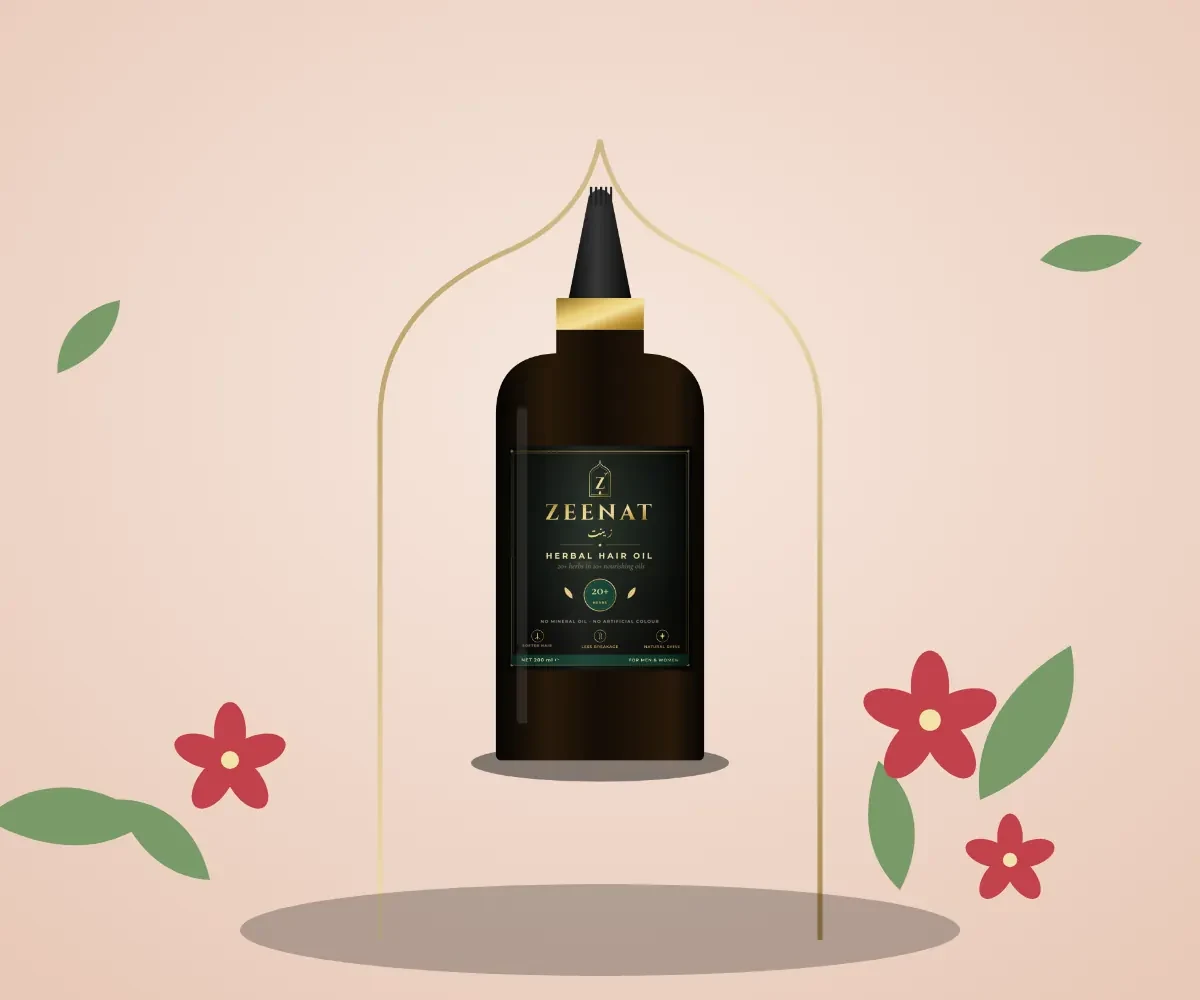
Zeenat Herbal Hair Oil includes kalonji oil as one of its 10+ oils, alongside sesame, coconut, olive, almond, castor, jojoba, walnut, pumpkin seed and vitamin E, with rosemary and lavender essential oils. It also carries 20+ traditional herbs, including amla, bhringraj, hibiscus, shikakai and brahmi. Because the kalonji is already blended with gentler oils, you do not need to measure or dilute anything, and the smell is soft. Used 2 to 3 times a week with a 5 minute massage, it nourishes the scalp, softens dry hair and helps reduce hair fall and breakage with regular use.
Kalonji ka tel bohat tez hota hai; isay hamesha nariyal, zaitoon ya badam ke tel mein mila kar lagayein, 1 hissa kalonji aur 3 se 4 hissay doosra tel.
Pehli baar kaan ke peeche patch test karein aur 24 se 48 ghante dekhein.
Hafte mein 2 se 3 baar 5 minute malish karein, 1 se 2 ghante ya raat bhar rakhein, phir halke shampoo se dho lein.
Kalonji oil for hair in short
- Kalonji (black seed, Nigella sativa) oil is a traditional, nourishing oil valued in Pakistani homes.
- Research on hair is still limited; enjoy it as part of a regular oiling routine, not as a miracle cure.
- Always dilute it, about 1 part kalonji to 3 or 4 parts carrier oil, and patch test first.
- Massage for 5 minutes, leave 1 to 2 hours or overnight, and wash with a mild shampoo, 2 to 3 times a week.
- Buy cold pressed oil in dark glass, and read the back of “kalonji” hair oils.
- See a doctor for patchy, sudden or heavy hair fall.
Frequently asked questions
Is kalonji oil good for hair?
Kalonji oil is a rich, traditional oil that many people use for scalp massage and dry hair. Some small studies are promising, but there is not yet strong evidence that it grows new hair on its own. It works best as part of a regular oiling routine.
How do I use kalonji oil on my hair?
Mix 1 part kalonji oil with 3 or 4 parts carrier oil such as coconut or olive oil, patch test, massage it into the scalp for about 5 minutes, leave it for 1 to 2 hours or overnight, and wash with a mild shampoo, 2 to 3 times a week.
Can I apply pure kalonji oil on my scalp?
Pure kalonji oil is strong and can irritate sensitive skin. It is safer to dilute it with a carrier oil or use a blended hair oil that already contains kalonji.
Does kalonji oil stop hair fall?
No oil stops hair fall on its own. A regular massage with a nourishing oil blend, including kalonji, helps reduce hair fall and breakage over time. Heavy or patchy hair fall should be checked by a doctor.
Can I mix kalonji oil with coconut oil?
Yes, it is one of the most popular mixes. Use about 1 tablespoon of kalonji oil to 4 tablespoons of coconut oil, warming the coconut oil first in winter.
How do I know if kalonji oil is pure?
Good kalonji oil is cold pressed, dark amber to brown, comes in a dark glass bottle and has a strong peppery smell. The ingredient list should show only Nigella sativa seed oil.
This article is general hair care information, not medical advice. For heavy, sudden or patchy hair loss, or a painful scalp, please see a dermatologist. Zeenat Herbal Hair Oil is a cosmetic product; results vary from person to person.
Keep reading
- How Long Should You Leave Oil in Your Hair?
- Hard Water and Hair Fall: How to Protect Your Hair at Home
- Dry, Frizzy Hair: How to Get Soft, Smooth Hair at Home
- Baby Hairs and a Thinning Hairline: How to Care for Your Edges
- Bridal Hair Care in Pakistan: A 3 Month Plan Before the Wedding
- Mehndi for Hair: The Complete Guide to Henna at Home
- Amla for Hair: How to Use Amla Oil, Powder and Masks at Home
- Castor Oil for Hair: How to Use Arandi Ka Tel the Right Way
- Summer Hair Care in Pakistan: Beat the Heat, Sweat and Frizz
- How to Get Long, Thick-Looking Hair Naturally: An Honest Desi Guide
- Hair Fall in Men: An Honest Guide to Keeping Your Hair
- Hair Fall After Delivery: A Calm Guide for New Mothers
- Looking for a Rivaaj Mahal Hair Oil Alternative? How to Choose a Genuine Desi Herbal Oil
- Rosemary Oil for Hair: What It Really Does and How to Use It Safely
- Dandruff Treatment at Home: Does Hair Oil Help or Make It Worse?
- Winter Hair Care in Pakistan: Keep Your Hair Soft All Season
- Hair Fall Treatment at Home: A Complete Guide for Pakistan
- How to Oil Your Hair the Right Way
- Best herbal hair oil in Pakistan: how to choose
- Current hair oil offers
- Zeenat Herbal Hair Oil