Quick answer
Amla (Indian gooseberry) is a traditional desi hair care herb, used in oils, powder packs, herbal washes and food. Research on amla alone is still limited, so expect softer, glossier, healthier looking hair rather than miracles. Use amla oil 2 to 3 times a week with a 5 minute scalp massage, leave it for 1 to 2 hours or overnight, and choose an oil that lists every ingredient and has no mineral oil.
Ask any Pakistani grandmother about hair care and amla will come up within a minute. Amla ka tel, amla ka murabba, amla powder mixed with mehndi, amla and reetha boiled together for washing: this small green fruit has been part of hair care in our homes for generations. Today you will see “amla” printed on dozens of hair oil bottles in every bazaar and pharmacy.
But what is amla, why is it used for hair, and what can you realistically expect from it? This guide explains amla in plain language: what it is, how it has traditionally been used, how to use amla oil, powder and masks at home, how to make your own amla oil, mistakes to avoid, and how to choose an amla hair oil in Pakistan without being fooled by big claims.
What is amla?
Amla is the fruit of the Indian gooseberry tree (Phyllanthus emblica, also called Emblica officinalis). It grows across South Asia, including Pakistan. The fruit is small, round, light green and very sour, with a bitter, astringent taste. In Urdu it is amla or aamla; in English you will see it called Indian gooseberry or emblic.
In winter, when amla is in season, you will find fresh fruit in sabzi mandis. The rest of the year it is easy to buy dried amla (sukha amla), amla powder from pansar (herbal) shops, amla murabba in jars, and many oils and shampoos with amla in them.
How amla has been used for hair
Amla has a long place in traditional South Asian hair care, both in desi home remedies and in Unani and Ayurvedic practice. It has been used in several ways:
- Infused in oil: dried amla is soaked or warmed in a base oil such as coconut or sesame, and the oil is used for scalp massage.
- As a powder in hair packs: mixed with water, yoghurt or mehndi and applied to the hair.
- As a hair wash: boiled with reetha and shikakai to make a gentle, soap free wash.
- As food: eaten fresh, as murabba, pickle (achar) or juice, as part of a healthy diet.
People traditionally reach for amla for dry, dull hair, for a healthy looking scalp, and to keep hair dark and glossy. Amla is also often mixed into mehndi because many people feel it gives a deeper, less orange tone.
What can amla do for your hair? An honest answer
Amla is rich in natural plant compounds, including vitamin C and polyphenols (the same family of compounds found in tea). That is one reason it has attracted interest from researchers. But most scientific studies on amla and hair so far are small, done in laboratories or on animals, or test amla mixed with many other herbs. There is not yet strong evidence from large studies on people that amla on its own grows new hair or reverses grey hair.
So what is a realistic way to think about amla?
- As part of an oil, the bigger benefit comes from the regular scalp massage and the nourishing oils themselves, which soften hair and reduce dryness and breakage.
- As a hair pack, many people find it leaves hair feeling cleaner, thicker and more glossy.
- As food, it is a good source of vitamin C, which is part of a balanced diet that supports healthy hair.
Be careful of any product that promises amla will “stop hair fall in 7 days”, “regrow hair on bald patches” or “turn white hair black permanently”. These are marketing claims, not facts. Good hair care is slow, regular and realistic.
Amla is one herb, not a miracle
In traditional hair care, amla is almost never used alone. It is combined with other herbs such as bhringraj, shikakai, reetha, brahmi and hibiscus, and with nourishing oils. A good blend and a steady routine matter more than any single ingredient.
How to use amla oil
Whether you buy an amla based oil or make your own, use it like this:
- Warm the oil slightly by standing the bottle in a mug of hot water for a few minutes. It should feel warm, never hot.
- Part your hair into sections so you can reach the scalp.
- Apply oil to the scalp with your fingertips or a dropper, section by section.
- Massage for about 5 minutes in small circles with your fingertips, not your nails.
- Spread the rest along the lengths and ends.
- Leave it for 1 to 2 hours, or overnight if your hair and scalp are dry. Cover your pillow with an old towel.
- Wash with a mild shampoo, twice if needed, and condition the ends.
Two to three times a week is enough for most people. For more detail, see our guide to oiling your hair the right way and how long to leave oil in your hair.
How to make amla oil at home
Homemade amla oil is simple and cheap. Here is a gentle method that does not need heating on the stove.
- Take a clean, completely dry glass jar.
- Add 4 to 5 tablespoons of dried amla pieces or 3 tablespoons of amla powder.
- Pour in about 250 ml of coconut, sesame (til) or mustard oil so the amla is fully covered.
- Close the jar and keep it in a warm, sunny spot (a window sill) for 1 to 2 weeks, shaking it once a day.
- Strain through a clean muslin cloth into a dry bottle.
A few safety notes. Use only dried amla, not fresh fruit, because the water in fresh amla can make the oil spoil and grow mould. Keep water away from the jar completely. If the oil smells sour or rancid, or you see anything growing in it, throw it away. Homemade oil is best used within one to two months.
Amla powder hair packs
Always do a patch test first. Wash packs out within 30 to 45 minutes and condition afterwards, as powders can feel drying.
Amla and dahi pack (for dry hair)
Mix 2 tablespoons of amla powder with 4 tablespoons of plain yoghurt to make a smooth paste. Apply to the scalp and lengths for 30 minutes, then wash with a mild shampoo.
Amla, reetha and shikakai pack (for an oily scalp)
Mix 1 tablespoon each of amla, reetha and shikakai powder with warm water to make a paste. Apply mainly to the scalp for 20 minutes, rinse very well and condition the ends. Keep it away from the eyes, as reetha stings.
Amla and aloe vera pack (for an itchy scalp)
Mix 1 tablespoon of amla powder with 3 tablespoons of fresh aloe vera gel. Apply to the scalp for 20 to 30 minutes and rinse.
Amla with mehndi
Many people add 2 to 3 tablespoons of amla powder to their mehndi paste. Mehndi can be very drying, so oil your hair the night before, and oil again a day after. Read our complete guide to mehndi for hair.
Amla, reetha and shikakai hair wash
This is the classic desi hair wash, used long before bottled shampoo. Soak 4 to 5 dried amla pieces, 5 to 6 reetha shells and 4 to 5 shikakai pods in 2 cups of water overnight. In the morning, boil for 10 to 15 minutes, let it cool, crush the softened pieces with your hand and strain. Use the liquid to wash your hair, massaging it into the scalp, then rinse well.
It gives only a light lather, and that is normal. Many people find it gentler than strong shampoos, especially for dry hair. Use it within a day or two, or keep it in the fridge.
Eating amla for healthy hair
Your hair grows from the inside, so diet matters. Amla is a good source of vitamin C, which the body needs to absorb iron from food, and low iron is a common reason for hair fall in Pakistan, especially among women. You can add amla to your diet as:
- Fresh amla in season, cut into small pieces with a pinch of salt.
- Amla murabba, one piece a day (it is sweet, so go easy if you watch your sugar).
- Amla achar (pickle) with meals.
- Amla juice diluted with water.
Amla is a food, not a medicine. If you have diabetes, kidney problems, take blood thinners or are pregnant, ask your doctor before taking amla supplements or large amounts of amla juice. And if you suspect low iron, get a blood test rather than guessing.
Amla and grey hair
Amla has a long reputation in desi homes for keeping hair dark. Amla mixed with mehndi does change the shade of the mehndi, and many people like the deeper tone. But there is no good evidence that amla oil or amla food reverses grey hair. Grey hair is mostly decided by your genes and age, although in young people it can sometimes be linked to low vitamin B12, thyroid problems or other health issues, which a doctor can check.
Using amla for different hair types
Amla suits most people, but the way you use it can change with your hair and scalp.
- Dry, rough hair: use amla oil 2 to 3 times a week and leave it overnight. Pair powder packs with dahi or aloe vera, never with water alone.
- Oily scalp: keep oiling to 1 to 2 hours before washing, and try the amla, reetha and shikakai pack once a week to leave the scalp feeling fresh.
- Curly or wavy hair: curls are often drier at the ends, so spread oil generously on the lengths and detangle only when hair has conditioner in it.
- Fine, thin hair: use a small amount of a lighter blend so hair does not look flat, and focus the oil on the scalp.
- Men with short hair: one to two teaspoons is enough. Massage it in for five minutes before a shower, then shampoo it out.
- Coloured or mehndi treated hair: amla oil is gentle, but amla powder can slightly change the tone of fresh colour. Test on a small strand first.
Whatever your type, the rule is the same: a small amount, a gentle massage, a regular routine, and patience. Changes in softness and shine often show within a few weeks; changes in how much hair you lose take longer, usually two to three months.
Mistakes to avoid with amla
- Using fresh amla in homemade oil. The water spoils the oil.
- Leaving amla powder packs on for hours. They dry out the hair and can be hard to wash out.
- Skipping conditioner after powder packs and herbal washes.
- Expecting results in a week. Give any routine at least 6 to 8 weeks.
- Trusting “100% amla” bottles with no ingredient list. Many cheap oils are mostly mineral oil with colour and fragrance.
- Ignoring a health problem. Heavy or patchy hair fall needs a doctor, not just a new oil.
How to choose an amla hair oil in Pakistan
There are hundreds of “amla oils” on the market. Here is how to pick a good one:
- Read the full ingredient list. It should name the oils and herbs, not just say “herbal extracts”.
- Check for mineral oil or liquid paraffin. Many cheap amla oils are mostly mineral oil, which sits on the hair but does not nourish it the way plant oils do.
- Look for a good base. Coconut, sesame, almond, olive and castor are all good carriers for amla.
- Look for a sensible herb blend. Amla works alongside bhringraj, shikakai, brahmi, hibiscus and reetha in traditional recipes.
- Avoid miracle claims. “Regrows hair in 7 days” is a warning sign.
- Buy from the brand directly where possible, to avoid fake or refilled bottles.
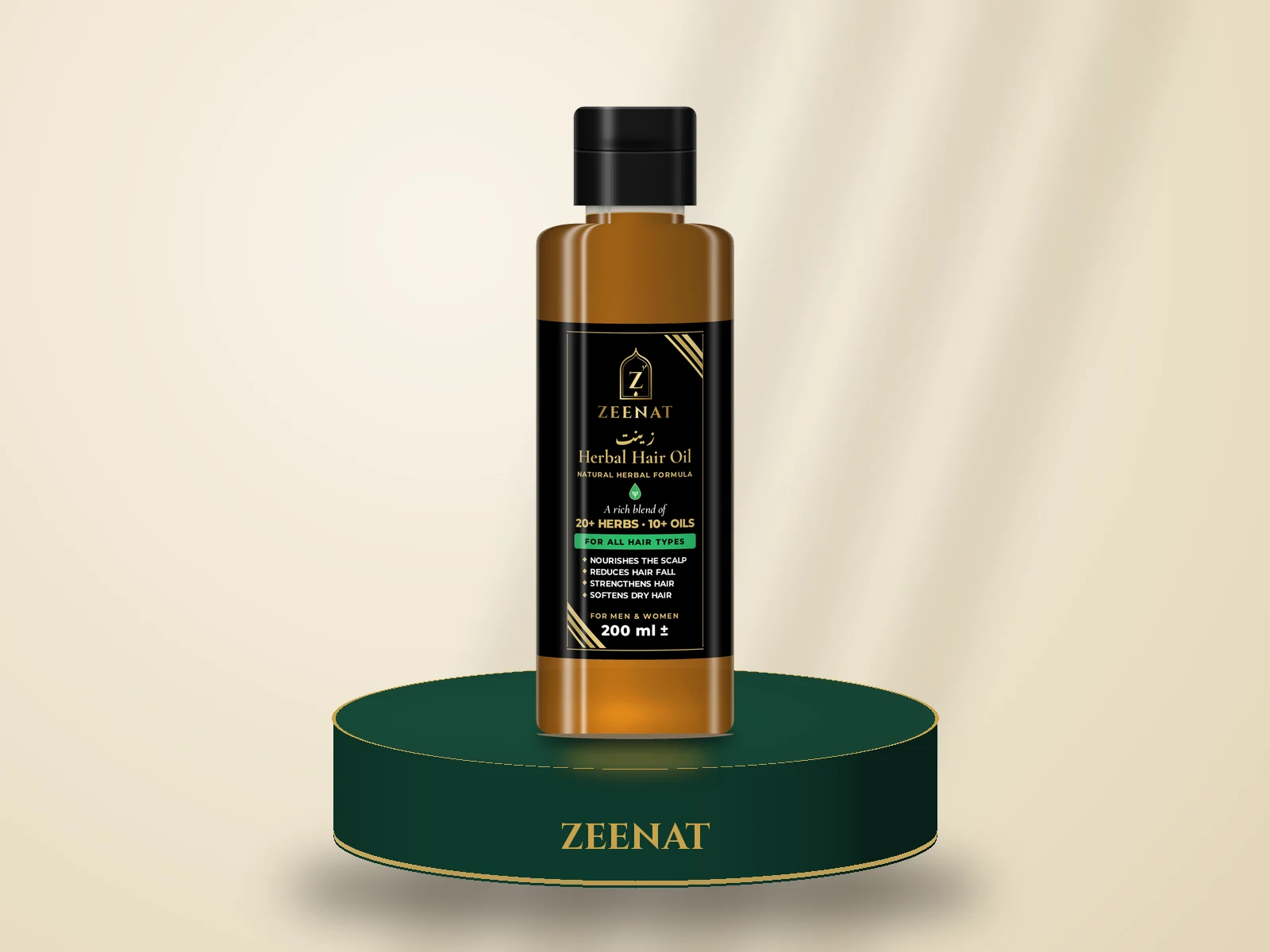
Zeenat Herbal Hair Oil contains amla alongside 20+ traditional herbs, including bhringraj, hibiscus, shikakai, brahmi, reetha and moringa, in 10+ oils such as sesame, coconut, olive, almond, castor, jojoba and kalonji. There is no mineral oil and no artificial colour, and every oil and herb is printed on the label. With regular use, it nourishes the scalp and helps reduce hair fall and breakage. You can compare it with other options in our guide to the best herbal hair oil in Pakistan.
Amla desi baalon ki hifazat ka purana hissa hai: tel mein, powder ke pack mein, reetha shikakai ke saath dhone mein aur khane mein.
Ghar ka amla tel sirf sukhay amla se banayein, taaza amla se nahi, warna tel kharab ho jata hai.
Amla akela koi jadu nahi; achhe tel ka mix, hafte mein 2 se 3 baar malish aur sabr asal farq dalte hain.
Amla for hair in short
- Amla (Indian gooseberry) is a traditional desi hair care herb, used in oils, powders, washes and food.
- Research is still limited; expect softer, glossier, healthier looking hair, not miracles.
- Use amla oil 2 to 3 times a week with a 5 minute massage, left on 1 to 2 hours or overnight.
- Make homemade amla oil only with dried amla, and keep water away from it.
- Wash powder packs out within 45 minutes and always condition.
- Choose oils with a full ingredient list and no mineral oil, and see a doctor for heavy hair fall.
Frequently asked questions
Is amla good for hair?
Amla has been used in desi hair care for generations in oils, powder packs and washes, and many people find it leaves hair softer and glossier. Research on amla alone is still limited, so it works best as part of a good oil blend and a regular routine.
How do I use amla oil for hair?
Warm it slightly, apply it to the scalp section by section, massage for about 5 minutes, spread the rest on the lengths, leave it for 1 to 2 hours or overnight, then wash with a mild shampoo. Two to three times a week is enough.
How do I make amla oil at home?
Put 4 to 5 tablespoons of dried amla in a dry glass jar, cover with about 250 ml of coconut or sesame oil, keep it in a warm sunny spot for 1 to 2 weeks shaking daily, then strain. Use only dried amla, as fresh amla makes the oil spoil.
Does amla turn grey hair black?
There is no good evidence that amla reverses grey hair. Mixed with mehndi it changes the colour tone of the mehndi. Early greying can sometimes be linked to health issues a doctor can check.
Can I mix amla powder with mehndi?
Yes, many people add 2 to 3 tablespoons of amla powder to mehndi paste for a deeper tone. Oil your hair before and after, as mehndi can be drying.
Which amla hair oil is best in Pakistan?
Choose an oil that lists every oil and herb, has no mineral oil, uses a good base like coconut, sesame or almond oil, and combines amla with other traditional herbs such as bhringraj and shikakai. Avoid miracle claims.
This article is general hair care information, not medical advice. For heavy, sudden or patchy hair loss, or a painful scalp, please see a dermatologist. Zeenat Herbal Hair Oil is a cosmetic product; results vary from person to person.
Keep reading
- How Long Should You Leave Oil in Your Hair?
- Hard Water and Hair Fall: How to Protect Your Hair at Home
- Dry, Frizzy Hair: How to Get Soft, Smooth Hair at Home
- Baby Hairs and a Thinning Hairline: How to Care for Your Edges
- Bridal Hair Care in Pakistan: A 3 Month Plan Before the Wedding
- Mehndi for Hair: The Complete Guide to Henna at Home
- Kalonji Oil for Hair: Benefits, Uses and Home Recipes
- Castor Oil for Hair: How to Use Arandi Ka Tel the Right Way
- Summer Hair Care in Pakistan: Beat the Heat, Sweat and Frizz
- How to Get Long, Thick-Looking Hair Naturally: An Honest Desi Guide
- Hair Fall in Men: An Honest Guide to Keeping Your Hair
- Hair Fall After Delivery: A Calm Guide for New Mothers
- Looking for a Rivaaj Mahal Hair Oil Alternative? How to Choose a Genuine Desi Herbal Oil
- Rosemary Oil for Hair: What It Really Does and How to Use It Safely
- Dandruff Treatment at Home: Does Hair Oil Help or Make It Worse?
- Winter Hair Care in Pakistan: Keep Your Hair Soft All Season
- Hair Fall Treatment at Home: A Complete Guide for Pakistan
- How to Oil Your Hair the Right Way
- Best herbal hair oil in Pakistan: how to choose
- Current hair oil offers
- Zeenat Herbal Hair Oil