Quick answer
Hair fall after delivery is common and usually temporary. During pregnancy, hormones keep hair in the growing phase; after birth they drop and the extra hairs shed together, usually starting 2 to 4 months after delivery, peaking around 3 to 5 months and settling by the baby’s first birthday. Be gentle with your hair, oil the scalp 2 to 3 times a week, eat enough protein and iron, and see a doctor for bald patches, shedding beyond 12 months, or signs of anaemia or thyroid problems.
You have just had a baby, your days and nights are full, and then one morning you see it: a handful of hair in the shower drain, strands all over your pillow, a thinner hairline in the mirror. For many new mothers in Pakistan this arrives around the time the baby is three or four months old, and it can be frightening. Family members may have advice, and some of it may make you worry more.
If this is you, take a breath. Hair fall after delivery (postpartum hair loss) is extremely common, it has a clear reason, and for most women it settles on its own. This guide explains why it happens, how long it lasts, what you can do at home to look after your hair and scalp, what to eat, and the signs that mean you should see a doctor.
Why hair falls after pregnancy
Normally, at any time, most of your hairs are growing and a small number are resting before they fall out. We all lose around 50 to 100 hairs a day without noticing.
During pregnancy, high hormone levels keep more hairs in the growing phase for longer. That is why many women notice thick, glossy hair while pregnant: they are simply shedding less than usual. After delivery, hormone levels drop back to normal, and all those extra hairs that were “held on” enter the resting phase together. A few months later, they fall out at the same time.
Doctors call this telogen effluvium. You are not going bald: you are losing, in a short time, the hair you would have lost gradually over the months of your pregnancy.
When it starts and how long it lasts
| Time after delivery | What usually happens |
|---|---|
| 0 to 2 months | Hair usually looks normal. |
| 2 to 4 months | Shedding starts, often suddenly. Most noticeable when washing and combing. |
| 3 to 5 months | Shedding is usually at its heaviest. Thinning at the temples and hairline is common. |
| 6 to 9 months | Shedding slows down. Short new “baby hairs” appear along the hairline. |
| Around 12 months | For most women, hair is back to its usual fullness by the baby’s first birthday. |
Every woman is different. It can feel worse after a second or third baby, or if you had a difficult delivery, lost a lot of blood, or are very short of sleep.
Normal shedding or something else?
Postpartum shedding is spread over the whole head, especially the front and temples. It is usually not normal if you notice:
- Round, smooth bald patches.
- Shedding that is still heavy after the baby is a year old.
- A red, painful, itchy or flaking scalp.
- Extreme tiredness, feeling cold, weight changes, a racing heart or low mood along with the hair fall.
- Dizziness, breathlessness or very pale skin, which can be signs of anaemia.
Thyroid problems after delivery and iron deficiency anaemia are both common in Pakistan and can cause or worsen hair fall. A simple blood test (CBC, ferritin, thyroid and vitamin D) can check. Please see your gynaecologist or a dermatologist if any of the above sounds familiar.
Gentle hair care for new mothers
You cannot stop postpartum shedding completely, but you can reduce breakage and look after your scalp while it passes:
- Be gentle when washing. Use a mild shampoo on the scalp and conditioner on the lengths. Lukewarm water, not hot.
- Do not skip washes out of fear. The hairs that come out in the shower have already been released; washing does not make you lose more.
- Detangle with a wide tooth comb, starting at the ends. Never comb wet hair roughly.
- Choose loose styles. A soft plait or loose bun, soft scrunchies instead of rubber bands. Tight styles pull at the hairline, exactly where shedding is worst.
- Avoid heat and chemicals for a few months: no straightening, rebonding, bleaching or strong colours.
- Consider a shorter cut. Shoulder length or shorter hair is easier to manage with a baby, looks fuller and tangles less.
- Babies pull hair! Tie your hair back loosely when feeding and holding the baby.
Oiling after delivery
In many Pakistani homes, the chilla (the first forty days) comes with a lot of care for the mother, and a warm oil massage is often part of it. A gentle scalp massage is relaxing, nourishes a dry scalp, and softens hair so it breaks less. It will not stop the hormonal shedding, but it can make your hair and scalp feel cared for during a tiring time, and those few quiet minutes are good for you too.
- Warm a little oil, part your hair and massage the scalp gently with your fingertips for about 5 minutes.
- Be gentle. No strong rubbing or pulling, especially at the hairline.
- Leave it on for 1 to 2 hours, or overnight if your scalp is dry, then wash with a mild shampoo.
- Two or three times a week is enough.
- Ask someone at home to do it for you while you rest. It is a lovely family tradition for a reason.
Breastfeeding and essential oils
Many hair oils contain small amounts of essential oils such as rosemary or lavender. If you are breastfeeding, patch test, keep oil away from your chest and the baby’s face, wash your hands before holding the baby, and ask your doctor if you have any doubt.
What to eat for your hair after delivery
Your body has been through a lot, and if you are breastfeeding it needs even more. Traditional Pakistani postpartum foods like panjeeri, dry fruits, desi ghee in moderation, soups and halwa are rich in energy. Make sure you also get:
- Protein: anday, daal, chicken, fish, dahi, doodh and chanay at every meal.
- Iron: gosht, kaleji, palak, saag, chanay, khajoor and gur, with vitamin C (kinnow, amrood, lemon) to help absorption.
- Healthy fats: badam, akhrot, alsi and til.
- Zinc: kaddu ke beej, gosht and dairy.
- Water: plenty, especially when breastfeeding.
- Your vitamins: keep taking the iron, calcium or multivitamin your doctor prescribed in pregnancy, for as long as your doctor advises.
Avoid crash diets to lose pregnancy weight quickly. Rapid weight loss is itself a common trigger of hair fall, two to three months later.
A simple weekly plan for busy mothers
With a new baby, hair care has to fit into a few spare minutes. This plan needs about 20 minutes a week:
| Day | What to do |
|---|---|
| Twice a week, at night | 5 minute gentle oil massage before sleeping, hair in a loose plait. |
| The morning after | Wash with a mild shampoo and lukewarm water, condition the ends, pat dry. |
| Every day | Wide tooth comb from the ends up, loose style, soft scrunchie. |
| Every meal | Some protein: anday, daal, dahi, chicken or chanay. |
| Every 3 months | Photo of your hairline in the same light, to see the regrowth. |
What about hair fall during pregnancy?
Most women shed less while pregnant, so noticeable hair fall during pregnancy is less common and worth mentioning to your doctor. It can be linked to iron deficiency, thyroid changes, illness or not eating enough because of nausea. Gentle care and oiling are fine during pregnancy for most women; patch test any product with essential oils and ask your doctor if you are unsure. Avoid strong chemical treatments such as rebonding and bleach while pregnant.
Myths you may hear at home
- “Cut your hair very short and it will come back thicker.” Cutting does not change how hair grows from the roots, though a shorter style is easier to manage and looks fuller.
- “Breastfeeding makes your hair fall.” Shedding is caused by the hormone drop after delivery and happens whether or not you breastfeed.
- “Don’t wash your hair for 40 days.” Gentle washing with lukewarm water is fine and keeps the scalp clean and comfortable. Follow your doctor’s advice after a caesarean.
- “This oil will stop the hair fall in a week.” No product can stop hormonal shedding. Be careful of anyone who promises it.
Look after yourself, not just your hair
Seeing your hair fall when you are already exhausted can hit hard. Remember that it is temporary, that it happens to most mothers, and that it is a sign of your body adjusting, not of something you did wrong. Sleep when you can, accept help, and talk to someone you trust if you are feeling low, anxious or overwhelmed for more than a couple of weeks. Postpartum depression is common and treatable, and your doctor can help.
When the baby hairs come back
From around six months, many mothers notice short, fine hairs sticking up along the hairline and parting. This is regrowth and a very good sign. These new hairs can look frizzy and stand up for a few months until they are long enough to lie flat. Keep them soft with a drop of oil, avoid tight styles that pull them, and be patient.
If you want to know more about hair fall in general, read our hair fall treatment at home guide, and for a full oiling method see how to oil your hair the right way.
Delivery ke 2 se 4 mahine baad baal girna bohat aam hai. Ye hormones ki wajah se hota hai aur aksar bachay ki pehli saalgirah tak theek ho jata hai.
Halke shampoo aur neem garam pani se dhoyein, dheeli choti banayein, garam straightener se bachein, aur hafte mein 2 se 3 baar halki tel ki malish karein.
Khane mein anday, daal, gosht, palak aur dry fruits shamil karein. Agar baal ek saal baad bhi zyada girein, ya thakawat aur kamzori bohat ho, to doctor se iron aur thyroid ka test karwayein.
In short
- Hair fall 2 to 4 months after delivery is common and caused by the normal drop in pregnancy hormones.
- It usually peaks around 3 to 5 months and settles by the baby’s first birthday.
- Be gentle: mild shampoo, lukewarm water, wide tooth comb, loose styles, no heat or chemicals.
- A gentle oil massage 2 to 3 times a week nourishes the scalp and reduces breakage, but no oil can stop hormonal shedding.
- Eat enough protein and iron, keep taking prescribed vitamins, and avoid crash diets.
- See a doctor for bald patches, shedding after 12 months, or signs of anaemia or thyroid problems.
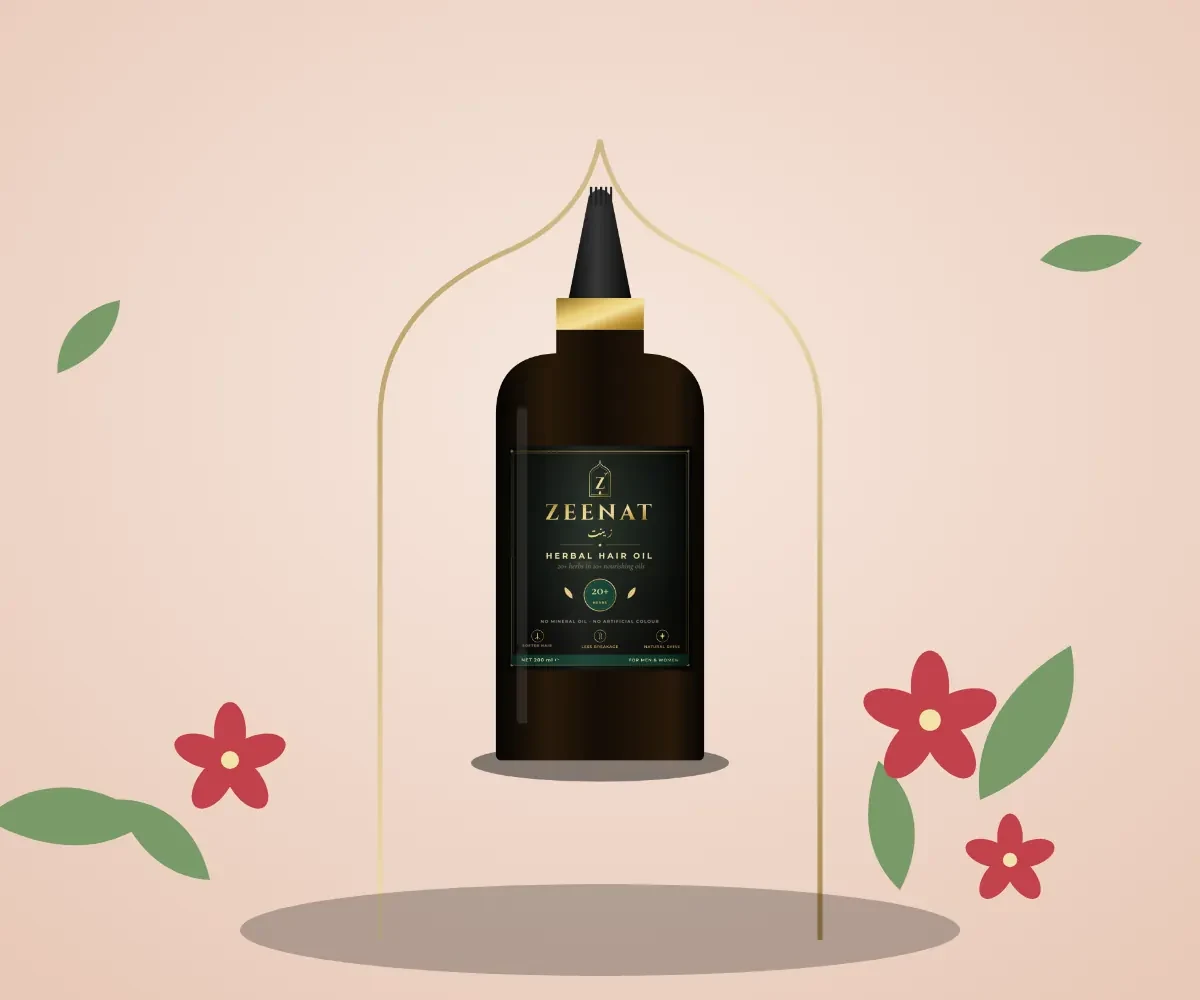
- For your weekly massage, try Zeenat Herbal Hair Oil.
Frequently asked questions
Is hair fall after delivery normal?
Yes. Most new mothers notice extra shedding 2 to 4 months after delivery. It happens because pregnancy hormones drop back to normal and the extra hairs held during pregnancy fall out together.
How long does postpartum hair fall last?
It usually peaks around 3 to 5 months after delivery and settles by the baby’s first birthday. If it continues after 12 months, see a doctor.
Can hair oil stop hair fall after pregnancy?
No oil can stop hormonal shedding. A gentle oil massage 2 to 3 times a week nourishes the scalp, softens hair and reduces breakage while the shedding settles.
Can I oil my hair while breastfeeding?
Yes, most mothers can. If your oil contains essential oils such as rosemary or lavender, patch test, keep it away from your chest and the baby’s face, wash your hands before holding the baby, and ask your doctor if unsure.
Does breastfeeding cause hair fall?
Postpartum shedding is caused by the drop in pregnancy hormones after birth and happens whether or not you breastfeed. Breastfeeding does increase your need for good food and water.
When should I see a doctor about hair fall after delivery?
See a doctor for round bald patches, heavy shedding after the baby is a year old, a painful or flaky scalp, or symptoms like extreme tiredness, dizziness, feeling cold or low mood, which can point to anaemia or thyroid problems.
This article is general hair care information, not medical advice. For heavy, sudden or patchy hair loss, or a painful scalp, please see a dermatologist. Zeenat Herbal Hair Oil is a cosmetic product; results vary from person to person.
Keep reading
- How to Get Long, Thick-Looking Hair Naturally: An Honest Desi Guide
- Hair Fall in Men: An Honest Guide to Keeping Your Hair
- Looking for a Rivaaj Mahal Hair Oil Alternative? How to Choose a Genuine Desi Herbal Oil
- Rosemary Oil for Hair: What It Really Does and How to Use It Safely
- Dandruff Treatment at Home: Does Hair Oil Help or Make It Worse?
- Winter Hair Care in Pakistan: Keep Your Hair Soft All Season
- Hair Fall Treatment at Home: A Complete Guide for Pakistan
- How to Oil Your Hair the Right Way
- Best herbal hair oil in Pakistan: how to choose
- Current hair oil offers
- Zeenat Herbal Hair Oil