Quick answer
Castor oil (arandi ka tel) is a very thick oil that coats and smooths the hair, softens dryness and reduces breakage, which can make hair look fuller over time. There is no strong evidence that it regrows bald patches. Mix 1 part castor oil with 2 or 3 parts coconut, almond or sesame oil, warm it, massage into the scalp for 5 minutes, leave for 2 hours or overnight, and shampoo before wetting your hair to wash it out easily.
Castor oil, or arandi ka tel, has been in Pakistani homes for a very long time. Our grandmothers rubbed it on eyebrows and eyelashes, on dry heels and on babies’ heads, and mixed it into hair oils. Today castor oil is everywhere on social media, with videos claiming it grows hair overnight, fills bald patches and thickens eyebrows in a week.
The real story is more modest, but castor oil is still a useful oil for dry, rough and breaking hair when you use it correctly. This guide explains what castor oil is, what it can and cannot do, how to use such a thick oil without making a mess, recipes for hair, eyebrows and the hairline, the difference between cold pressed and “black” castor oil, and how to buy a good one in Pakistan.
What is castor oil?
Castor oil is pressed from the seeds of the castor plant (Ricinus communis), called arandi in Urdu. The plant grows easily in Pakistan’s warm climate, and you can see it growing wild along roads and canals in Punjab and Sindh. The oil is pale yellow, very thick and sticky, with almost no smell.
Castor oil is unusual. Around 85 to 90 percent of it is a single fatty acid called ricinoleic acid. This is what makes it so thick, and why it behaves differently from coconut, almond or olive oil.
An important safety note
Castor seeds contain a dangerous toxin and must never be eaten or crushed at home. The oil sold in shops is processed so that it does not contain this toxin. Always buy ready made castor oil from a trusted source, and keep the seeds and the plant away from children.
What can castor oil do for hair?
Let us separate what is reasonable from what is hype.
What it does well
- Coats and smooths the hair. Its thick texture forms a layer on the hair surface, making rough, dry hair feel smoother and look shinier.
- Reduces dryness and breakage. Hair that is coated and moisturised tangles less and snaps less when you comb it, so fewer broken pieces end up in your comb.
- Makes a rich scalp massage. Because it is so thick, it stays where you put it, which many people like for a slow, deep massage.
- Softens dry ends. A tiny amount on the ends helps with frizz and split end appearance.
What research has not shown
Despite the internet claims, there is no strong scientific evidence that castor oil on its own regrows hair on bald patches, treats genetic hair loss, or doubles hair growth. Laboratory studies on ricinoleic acid are interesting, but they are not the same as proof on people’s scalps. Many “before and after” videos also mix castor oil with other products or treatments.
So use castor oil for what it does well: softening, smoothing and reducing breakage, as part of a regular oiling routine. That alone can make hair look and feel thicker over time, because less of it breaks off.
Why castor oil works best in a blend
Pure castor oil is so thick that it is hard to spread, hard to wash out, and can leave hair sticky and flat. Many people also find it heavy on the scalp. That is why traditional and modern hair oils usually mix castor with lighter oils such as coconut, sesame, almond, olive or jojoba. You get the smoothing effect of castor with an oil that spreads easily and washes out in one or two shampoos.
A good home ratio is 1 part castor oil to 2 or 3 parts lighter oil.
How to use castor oil on your hair
- Mix it first with a lighter oil, as above.
- Warm it slightly by standing the bowl or bottle in hot water. Warm castor oil flows much more easily.
- Section your hair and apply the oil to the scalp with a dropper or your fingertips.
- Massage for about 5 minutes in small circles.
- Spread it along the lengths, concentrating on dry ends.
- Leave it for 2 hours or overnight. Castor blends work well overnight. Use an old pillow cover or a cotton scarf.
- Wash it out properly. Apply shampoo to dry, oiled hair first, massage, then add water and rinse. This breaks up the oil better. Shampoo a second time if needed.
Two times a week is enough for most people. For more detail on technique, see our guide to oiling your hair the right way.
The shampoo-first trick
Thick oils like castor are easier to wash out if you put shampoo on your oiled hair before wetting it. Work it in, then add a little water, lather, and rinse. Most people need only one or two washes this way.
Castor oil recipes for hair
Always patch test new mixes behind your ear and wait 24 to 48 hours.
Castor and coconut oil (everyday blend)
Mix 1 tablespoon of castor oil with 3 tablespoons of coconut oil. A good all round blend for dry, rough hair. In winter, warm the coconut oil first.
Castor, almond and rosemary (for a lighter feel)
Mix 1 tablespoon of castor oil, 3 tablespoons of almond (badam) oil and 4 to 5 drops of rosemary essential oil. Shake well before each use. Read our rosemary oil guide for how to use rosemary safely.
Castor and aloe vera (for the scalp)
Mix 1 teaspoon of castor oil into 3 tablespoons of fresh aloe vera gel. Apply to the scalp for 30 to 45 minutes and wash. This is lighter than an oil mix and suits an oily scalp.
Castor oil for the ends
Rub just one or two drops of castor oil between your palms and smooth them over the last few inches of your hair after washing, while the hair is still slightly damp. Too much will look greasy.
Castor oil for eyebrows, eyelashes and the hairline
This is one of the most popular uses in Pakistan. Thin eyebrows from years of threading, and a thinning hairline or baby hairs at the edges, are common worries.
- Eyebrows: with a clean spoolie brush or cotton bud, apply a very thin layer of castor oil to the brows at night, and wash your face in the morning.
- Eyelashes: be very careful. Use only a tiny amount on a clean spoolie on the outer lashes, never inside the eye. If your eyes sting or turn red, stop. Many eye doctors advise against putting oils near the eyes at all, so skip this if your eyes are sensitive.
- Hairline and edges: massage a drop or two of a castor blend into the hairline with your fingertip each night. Avoid tight hairstyles, which pull on the edges.
Do not expect brows to grow back where follicles have been damaged by years of plucking. Castor oil can make existing hairs look darker, glossier and fuller because it coats them. For more on edges, read our guide to baby hairs and hairline care.
Castor oil for men and beards
Castor oil is popular with Pakistani men for patchy beards and moustaches. For the beard, mix 1 part castor oil with 3 parts jojoba, almond or olive oil, so it is not sticky. Rub 3 to 4 drops between your palms at night and massage into the beard and the skin underneath. Wash your face in the morning. A beard that looks patchy in your early twenties often fills in naturally with age; castor oil can make the hairs you have look darker and fuller, but it does not create new follicles.
On the scalp, men with short hair only need one to two teaspoons of a castor blend. Massage it in for five minutes before a shower and shampoo it out. For receding temples or a thinning crown, read our guide to hair fall in men, because that kind of thinning is usually genetic and needs a different plan.
How long before you see results?
Hair grows about one centimetre a month, so any routine needs time. With a castor blend used twice a week, most people notice smoother, softer, shinier hair within the first two or three washes, because the oil coats the hair straight away. Fewer broken hairs in the comb usually shows after four to eight weeks of steady use, as the ends stay moisturised and tangle less. Give it at least two to three months before you judge any change in thickness. Keep the rest of your routine the same during that time, so you know what is making the difference.
Cold pressed vs black castor oil
| Cold pressed castor oil | Black castor oil | |
|---|---|---|
| How it is made | Pressed from raw seeds without heat | Seeds are roasted first, then the oil is extracted |
| Colour | Pale yellow, clear | Dark brown to black |
| Smell | Almost none | Smoky, roasted |
| Texture | Very thick | Very thick, sometimes slightly gritty |
| Used for | Hair, brows, skin | Mostly hair and scalp, popular for curly hair |
Both are used for hair. There is no good evidence that black castor oil works better than cold pressed for hair growth, although some people prefer its feel. In Pakistan, cold pressed castor oil is easier to find and usually cheaper. Avoid industrial or “commercial grade” castor oil, which is not meant for skin.
Who should be careful
- Sensitive skin: castor oil can cause irritation or a rash in some people. Patch test first.
- Long, fine hair: pure castor oil can tangle long, fine hair badly into knots that are hard to undo. Always dilute and detangle gently.
- Oily scalp or dandruff: keep it on for a shorter time and wash out the same day.
- Children: use only a mild, diluted blend and keep all oils away from their eyes.
- Taking castor oil by mouth: it is a strong laxative. Never take it, or give it to children or during pregnancy, without a doctor’s advice.
How to buy good castor oil in Pakistan
- Look for cold pressed, hexane free castor oil meant for cosmetic or pharmaceutical use.
- Choose a sealed bottle from a pharmacy or trusted brand, ideally in dark glass or thick plastic.
- The oil should be clear and pale yellow with almost no smell (unless it is black castor oil).
- Check the ingredient list: it should say only Ricinus communis seed oil.
- Avoid loose oil from open containers in the market, which may be mixed or old.
Mistakes to avoid
- Using a large amount of pure castor oil. It mats the hair and is very hard to wash out.
- Leaving it in for days. Wash it out within a day.
- Pulling at tangles after oiling with castor, which breaks hair. Use a wide tooth comb, from the ends up.
- Believing it will regrow bald patches. Patchy hair loss needs a doctor.
- Putting it inside the eyes. Only the outer lashes, if at all.
Castor oil in Zeenat Herbal Hair Oil
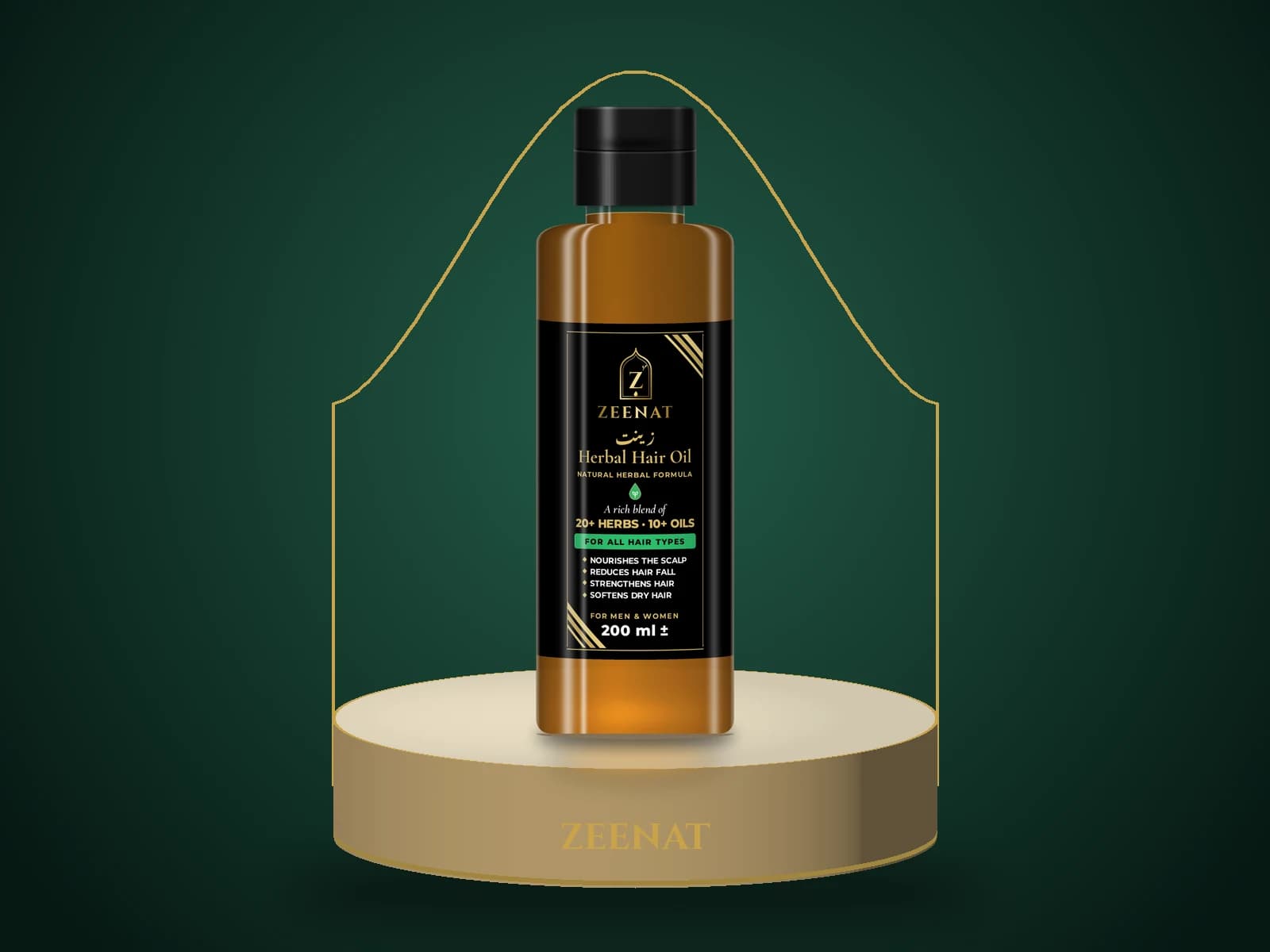
Zeenat Herbal Hair Oil already blends castor oil with lighter oils, sesame, coconut, olive, almond, jojoba, walnut, pumpkin seed and kalonji, plus vitamin E, rosemary and lavender essential oils, and 20+ traditional herbs like amla, bhringraj and hibiscus. That means you get the rich, smoothing feel of castor without measuring or mixing, and it spreads and washes out easily. Used 2 to 3 times a week, it nourishes the scalp, softens dry hair and helps reduce hair fall and breakage with regular use. For a steady routine, our 2 Bottle Deal keeps you going for around three months.
Arandi ka tel bohat garha hota hai; isay hamesha nariyal, badam ya til ke tel mein mila kar lagayein, 1 hissa arandi aur 2 se 3 hissay doosra tel.
Dhone se pehle geele baalon par nahi, khushk tel wale baalon par pehle shampoo lagayein, phir pani dalein; tel aasani se nikal jata hai.
Bhanwon par raat ko patli si teh lagayein, magar aankh ke andar kabhi na jaane dein.
Castor oil for hair in short
- Castor oil (arandi ka tel) is a very thick oil that coats, smooths and softens dry hair and reduces breakage.
- There is no strong evidence that it regrows bald patches or genetic hair loss.
- Mix it 1 to 2 or 3 with a lighter oil, warm it, massage for 5 minutes and leave for 2 hours or overnight.
- Shampoo oiled hair before wetting it to wash castor out easily.
- Use a thin layer on brows and the hairline; keep it out of the eyes.
- Buy cold pressed, cosmetic grade oil, and never eat the seeds.
Frequently asked questions
Does castor oil grow hair?
There is no strong evidence that castor oil on its own regrows hair on bald patches or treats genetic hair loss. It coats and smooths hair and reduces breakage, which can make hair look thicker over time.
How do I use castor oil on my hair?
Mix 1 part castor oil with 2 or 3 parts lighter oil such as coconut or almond, warm it, massage into the scalp for about 5 minutes, spread it along the lengths, and leave it for 2 hours or overnight before washing.
How do I wash castor oil out of my hair?
Apply shampoo to your oiled hair before wetting it, massage it in, then add water, lather and rinse. Shampoo a second time if needed.
Can I use castor oil on my eyebrows?
Yes. Apply a very thin layer with a clean spoolie at night and wash your face in the morning. It makes existing brow hairs look darker and fuller. Keep it out of your eyes.
Which is better, black castor oil or cold pressed castor oil?
Both are used for hair. Black castor oil is made from roasted seeds and is darker with a smoky smell. There is no good evidence that one grows hair better than the other.
Can I leave castor oil in my hair overnight?
Yes, a castor oil blend works well overnight. Cover your pillow and wash it out the next morning. Do not leave it in for days.
This article is general hair care information, not medical advice. For heavy, sudden or patchy hair loss, or a painful scalp, please see a dermatologist. Zeenat Herbal Hair Oil is a cosmetic product; results vary from person to person.
Keep reading
- How Long Should You Leave Oil in Your Hair?
- Hard Water and Hair Fall: How to Protect Your Hair at Home
- Dry, Frizzy Hair: How to Get Soft, Smooth Hair at Home
- Baby Hairs and a Thinning Hairline: How to Care for Your Edges
- Bridal Hair Care in Pakistan: A 3 Month Plan Before the Wedding
- Mehndi for Hair: The Complete Guide to Henna at Home
- Amla for Hair: How to Use Amla Oil, Powder and Masks at Home
- Kalonji Oil for Hair: Benefits, Uses and Home Recipes
- Summer Hair Care in Pakistan: Beat the Heat, Sweat and Frizz
- How to Get Long, Thick-Looking Hair Naturally: An Honest Desi Guide
- Hair Fall in Men: An Honest Guide to Keeping Your Hair
- Hair Fall After Delivery: A Calm Guide for New Mothers
- Looking for a Rivaaj Mahal Hair Oil Alternative? How to Choose a Genuine Desi Herbal Oil
- Rosemary Oil for Hair: What It Really Does and How to Use It Safely
- Dandruff Treatment at Home: Does Hair Oil Help or Make It Worse?
- Winter Hair Care in Pakistan: Keep Your Hair Soft All Season
- Hair Fall Treatment at Home: A Complete Guide for Pakistan
- How to Oil Your Hair the Right Way
- Best herbal hair oil in Pakistan: how to choose
- Current hair oil offers
- Zeenat Herbal Hair Oil