Quick answer
In a Pakistani winter, oil your hair 2 to 3 times a week with warm oil and a 5 minute scalp massage, wash only 2 to 3 times a week with lukewarm (not hot) water and a mild shampoo, always condition, never go out with wet hair, line woollen caps with cotton or silk, and eat dry fruits, eggs, saag and citrus. Small white flakes usually mean a dry scalp; greasy yellow flakes are more likely dandruff and need an anti-dandruff shampoo.
Every year, as soon as November arrives and the first cold nights settle over Lahore, Islamabad, Peshawar and the north, the same complaints start: “my hair has become so dry”, “my scalp is itching all the time”, “flakes on my black shawl”, and “why is my hair falling more in winter?”. Even in Karachi, where winter is mild, the dry northern wind and hot showers leave hair feeling rough.
Winter is hard on hair in Pakistan for very specific reasons: dry air, gas heaters and blowers indoors, very hot water from the geyser, woollen caps and shawls rubbing against the hair, and less water drinking because we do not feel thirsty. The good news is that a few small changes to your routine can keep your hair soft and your scalp comfortable all season. This guide covers what changes in winter, a simple winter routine, desi remedies, and what to do about dry scalp, flakes and seasonal hair fall.
Why winter is hard on your hair
Dry air outside, drier air inside
Cold air holds very little moisture. Indoors, gas heaters, electric blowers and angeethis dry the air even more. Your hair and the skin of your scalp lose water to this dry air, so hair becomes rough, frizzy and full of static, and the scalp feels tight and itchy.
Very hot water
On a cold morning a steaming hot bath feels wonderful, but very hot water strips the natural oils from your scalp and hair. That is one of the biggest reasons for dry, flaky scalps in winter.
Caps, shawls and hijabs
Woollen caps, mufflers, shawls and scarves rub against the hair all day. Wool and synthetic fabrics create friction and static, which roughs up the hair surface and causes breakage, especially at the back of the neck and at the ends.
Less water, less sun, heavier food
In winter we drink less water, spend more time indoors and away from the sun, and often eat more fried food and sweets (gajar ka halwa, pakoras, samosay) and fewer fresh vegetables. All of this affects the skin and hair from the inside.
Seasonal shedding
Many people notice they shed a little more hair at certain times of the year. Some extra hair fall in autumn and early winter is common and usually settles on its own. Heavy, sudden or patchy hair fall is different and should be checked by a doctor.
A simple winter hair care routine
Here is a routine that works for most hair types through the Pakistani winter, from November to February.
- Oil 2 to 3 times a week. Winter is the season when oiling helps most. Massage warm oil into the scalp for about 5 minutes and leave it on overnight or for at least 1 to 2 hours.
- Wash 2 to 3 times a week, not every day. Daily shampoo in winter dries the scalp. If your scalp is very oily, wash every other day with a mild shampoo.
- Lukewarm water only. Keep the geyser water warm, not hot, and finish with a cooler rinse.
- Condition every time you shampoo, on the lengths and ends.
- Dry gently. Pat with a soft towel or cotton t-shirt and let your hair air dry indoors. Do not step out into cold wind with wet hair.
- Seal the ends. Rub two or three drops of oil between your palms and smooth over the ends of dry hair to reduce frizz and static.
- Protect under caps and shawls. Line woollen caps with a cotton or silk scarf, or tie your hair in a loose plait before wrapping a shawl.
Winter oiling, the easy way
Coconut oil turns solid in the cold. Stand the bottle in a mug of hot water for a few minutes before use, or choose a blended oil with sesame, almond and olive oil that stays liquid in winter.
Dry scalp vs dandruff: what is the difference?
Flakes in winter are not always dandruff, and the difference matters because the care is different.
| Dry scalp | Dandruff | |
|---|---|---|
| Flakes | Small, white, dry, fall easily | Larger, yellowish, slightly greasy, stick to the scalp |
| Scalp feels | Tight and dry, itchy after washing | Oily and itchy, sometimes red |
| Rest of your skin | Often dry too (hands, lips, legs) | Often oily face, flakes near eyebrows or nose |
| Oiling | Usually feels better with regular oiling | Heavy oil left on for long can make it worse |
| What helps | Lukewarm water, mild shampoo, regular oil massage | Anti-dandruff shampoo; ask a pharmacist or dermatologist |
If you have a dry scalp, oil massage two to three times a week, lukewarm water and a mild shampoo usually make a clear difference within a few weeks. If you have dandruff, keep oiling shorter (one to two hours, not overnight), wash it out the same day, and use an anti-dandruff shampoo as advised by a pharmacist or dermatologist. Many people use both: oil before washing, then an anti-dandruff shampoo.
Winter hair fall: what helps
A bit more shedding in winter is common. Breakage from dry, brittle hair also looks like hair fall, because broken pieces collect in your comb. To keep it under control:
- Keep your hair moisturised with regular oiling and conditioner so it is less brittle.
- Detangle with a wide tooth comb, starting from the ends.
- Avoid tight plaits and ponytails under caps and shawls.
- Do not blow dry on high heat; air dry indoors instead.
- Eat enough protein and iron, and get some winter sun for vitamin D.
- Be patient: most seasonal shedding settles within a few weeks.
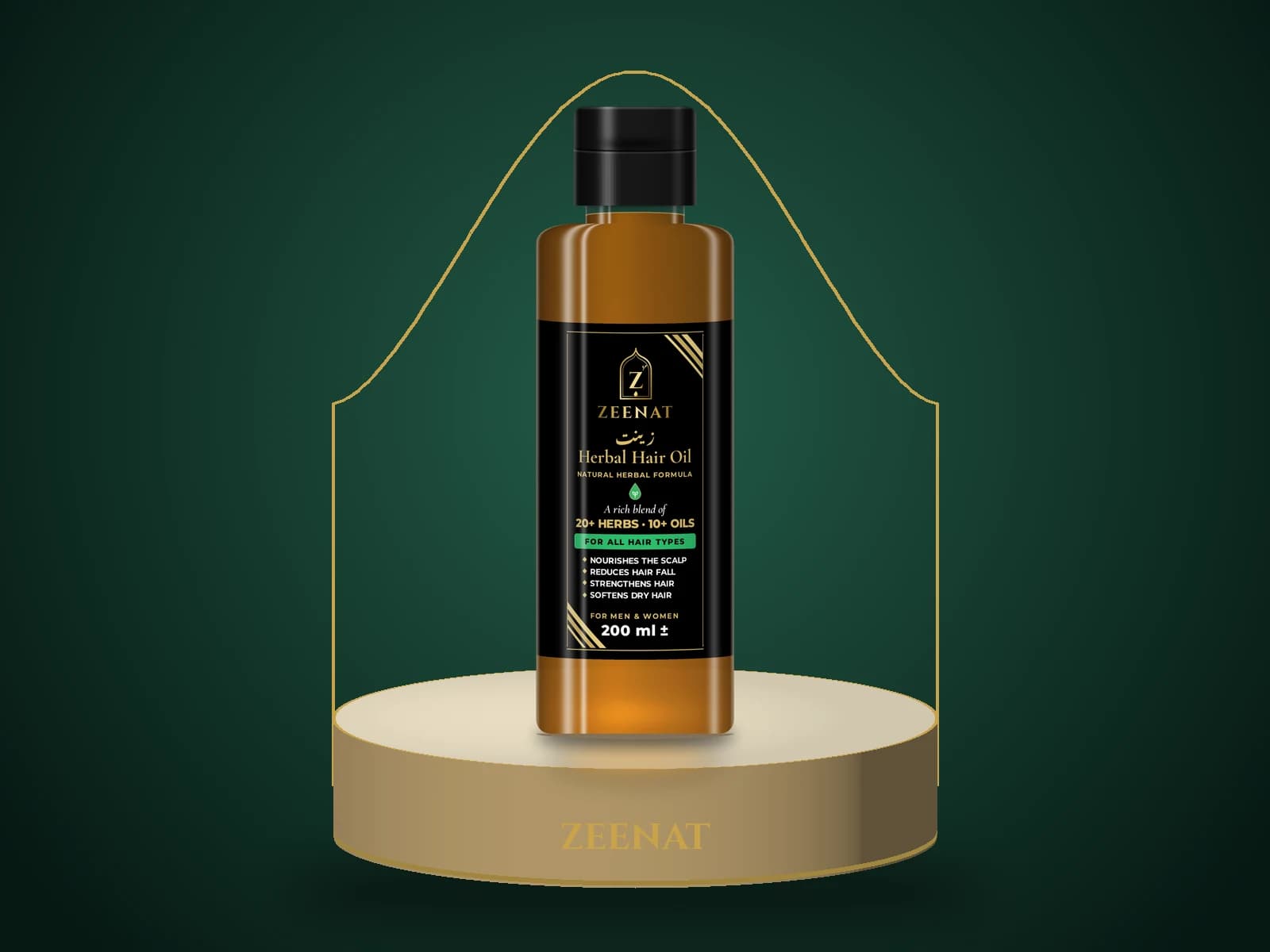
For a full plan, read our hair fall treatment at home guide. A herbal oil such as Zeenat, used regularly, helps reduce hair fall and breakage and softens dry winter hair.
Desi winter hair remedies
These traditional nuskhay are easy to make at home and suit the dry winter months. Always patch test first.
Warm oil overnight
The simplest and most effective. Warm your oil gently in a bowl of hot water, massage it in for five minutes before bed, plait your hair loosely and wash in the morning. Our step by step guide on how to oil your hair the right way explains the method in detail.
Yoghurt and honey mask
Mix three spoons of plain dahi with one spoon of honey. Apply to the lengths of your hair (and the scalp if it is dry, not if you have dandruff), leave for 20 minutes and rinse with lukewarm water. It leaves dry winter hair noticeably softer.
Banana mask for very dry hair
Mash one ripe banana completely smooth (lumps are hard to wash out), mix with a spoon of olive oil and apply to the lengths for 20 to 30 minutes. Rinse well. Good for thick, curly or very dry hair.
Aloe vera and oil
A spoon of fresh aloe vera gel mixed with your hair oil makes a lighter treatment for people whose scalp gets greasy easily but whose ends are dry.
Egg mask
Whisk one egg with a spoon of oil, apply to the lengths for 20 minutes and rinse with cool water. Hot water will cook the egg in your hair.
Winter hair care for men
Men’s hair goes through the same winter dryness, and caps and helmets add friction. A teaspoon of oil massaged into the scalp twice a week, lukewarm water instead of very hot, and a few drops of oil in the beard (worked into the skin and combed through) keep the scalp and beard from itching and flaking. Wash out oil before wearing a cap all day.
Children’s hair in winter
Children get dry scalps in winter too, especially when they wear woollen caps to school all day. Wash their hair two or three times a week with a gentle shampoo and lukewarm water, dry it fully before they go out or to bed, and give a light oil massage once or twice a week with a small amount of oil, keeping it away from the eyes. Choose a soft cotton lining inside their caps. Always patch test a new oil on children first, and ask your doctor before using any oil on a baby’s scalp. Many families make Sunday oiling a weekly ritual: the children sit in the winter sun while an elder massages their hair, which is good for their hair and their vitamin D.
Winter foods for healthy hair
Pakistani winters bring some of the best foods for your hair. Make the most of them:
- Dry fruits: walnuts, almonds, peanuts (moongphali) and chilgozay give healthy fats and vitamin E. A small handful a day is enough.
- Eggs and fish: protein, and fish is one of the few food sources of vitamin D.
- Saag and palak: iron and folate. Have them with makai ki roti and a squeeze of lemon.
- Carrots and gajar ka juice: vitamin A for the scalp.
- Kinnu, malta and amrood: vitamin C, which helps you absorb iron.
- Daal, chanay and soups: warm, filling protein.
- Water: keep a bottle near you. Warm water, green tea and soups count too.
Enjoy halwa and pakoras, but not every day. And try to sit in the winter sun for 15 to 20 minutes in the late morning: it is free vitamin D.
Winter hair mistakes to avoid
- Very hot water for long baths.
- Going out in cold wind with wet hair.
- Sitting right in front of the gas heater or blower, which dries hair and skin quickly.
- Sleeping in a woollen cap.
- Skipping conditioner because “it is winter, my hair is not oily”.
- Washing every day with a strong shampoo.
- Leaving oil in for two or three days because it is too cold to wash.
Shaadi season: protecting hair through weddings
Winter is also wedding season in Pakistan. Mehndi, baraat and walima back to back means blow drying, curling, straightening, tight buns, hairspray and late nights, often for weeks. Hair that is already dry from the cold suffers even more. A few simple steps help a lot:
- Oil the night before, not the morning of. Oil overnight, then wash in the morning so hair is soft but clean for styling.
- Use a heat protectant before any straightener, curler or blow dryer, and keep the heat on a medium setting.
- Loosen tight buns and parandas as soon as you get home, and never sleep with pins and hairspray in your hair.
- Brush out hairspray gently with a wide tooth comb after a few drops of oil, before washing.
- Give hair a rest day between functions: no heat, a loose plait and an oil massage.
- Bridal hair care: brides should start a regular oiling routine at least two to three months before the wedding. Hair care shows results slowly, so the earlier the better.
Winter care for mehndi or coloured hair
Mehndi (henna) and hair colour both tend to make hair feel drier, and winter makes it worse. If you use mehndi, oil your hair the night before or a day after applying it, not right before, as oil can stop the colour from taking. Mixing a little dahi into your mehndi paste makes it less drying. For chemically coloured hair, use a mild, sulphate-free shampoo, condition every wash, and do a deep oil treatment once a week to keep the ends soft. Do not wash with very hot water, which fades colour faster.
Different winters, different care
Pakistan’s winter is not the same everywhere. In Gilgit, Skardu, Murree and Quetta, the air is very cold and dry: oil overnight and keep hair covered outside. In Lahore, Faisalabad, Multan and Islamabad, smog and fog add dust and pollution, so wash oiled hair properly and cover your hair when outdoors. In Karachi and Hyderabad, winter is mild and humid near the sea but the occasional dry spell still roughs up hair; oiling twice a week is usually enough.
Plan your winter supply
Because winter is the season when you oil most often, it is the season you are most likely to run out halfway. One 200 ml bottle usually lasts one person about 5 to 8 weeks at 2 to 3 oilings a week, so the whole winter needs two or three bottles per person. If the whole family is oiling, our 3 Bottle Deal gives you three bottles for less, and the 2 Bottle Deal is ideal for two people or one long winter.
Winter hair care in short
- Oil 2 to 3 times a week, warm oil, 5 minute massage, overnight if your hair is dry.
- Wash 2 to 3 times a week with lukewarm water and a mild shampoo, and always condition.
- Never go out with wet hair, and line woollen caps with cotton or silk.
- Know the difference between a dry scalp and dandruff, and treat them differently.
- Eat dry fruits, eggs, saag and citrus, drink water and get some sun.
- See a dermatologist if hair fall is heavy, sudden or patchy, or if your scalp is red and painful.
Frequently asked questions
Why does my hair fall more in winter?
Dry air, gas heaters, hot water and friction from caps and shawls make hair dry and brittle, so it breaks more. Some extra seasonal shedding is also common and usually settles within a few weeks. Heavy or patchy hair fall should be checked by a doctor.
Is oiling good for hair in winter?
Yes, winter is when oiling helps most. Massage warm oil into the scalp 2 to 3 times a week and leave it on for 1 to 2 hours or overnight, then wash with lukewarm water.
How do I get rid of a dry, itchy scalp in winter?
Use lukewarm instead of hot water, shampoo only 2 to 3 times a week with a mild shampoo, oil your scalp regularly and drink enough water. If flakes are greasy and yellow, it is more likely dandruff and an anti-dandruff shampoo can help.
Which hair oil is best for winter in Pakistan?
A blend that stays liquid in the cold, such as sesame, almond, olive and castor oil with herbs like amla and bhringraj. Pure coconut oil solidifies in winter, so warm it first. Zeenat Herbal Hair Oil is a blend of 20+ herbs in 10+ oils that suits winter use.
How often should I wash my hair in winter?
2 to 3 times a week is enough for most people. Daily shampooing in winter dries out the scalp. Wash more often only if your scalp is very oily.
Should I cover my hair in winter?
Yes, cover it in cold wind, smog and dust, but line woollen caps with a cotton or silk scarf and keep hairstyles loose to avoid friction and breakage.
This article is general hair care information, not medical advice. For heavy, sudden or patchy hair loss, or a painful scalp, please see a dermatologist. Zeenat Herbal Hair Oil is a cosmetic product; results vary from person to person.