Quick answer
Small, dry, white flakes usually mean a dry scalp, which oil helps. Greasy, yellowish flakes usually mean dandruff, which is linked to a scalp yeast that feeds on oil, so heavy oil left on for long can make it worse. For dandruff, use an anti-dandruff shampoo (ketoconazole, zinc pyrithione or selenium sulphide) 2 to 3 times a week and leave it on the scalp for 3 to 5 minutes; oil only 30 to 60 minutes before a wash. See a dermatologist if nothing improves in 4 weeks.
White flakes on your kurta, an itchy scalp you cannot stop scratching in the office, and a black shawl that shows every flake: dandruff is one of the most common hair problems in Pakistan. It is so common that almost every hair oil online now calls itself an “anti dandruff hair oil”.
Here is something many sellers will not tell you: for real dandruff, a lot of heavy oil left on the scalp can actually make things worse. For a dry, flaky scalp, on the other hand, oil is one of the best things you can use. The trick is knowing which one you have. This guide explains the difference, what really works for dandruff (dandruff ka ilaj), how to oil safely if you are prone to flakes, which desi remedies are worth trying, and when it is time to see a skin doctor.
What dandruff actually is
Your scalp is skin, and skin constantly renews itself. Normally the old cells fall away unnoticed. With dandruff, the scalp renews too fast and the cells clump into visible flakes.
In most people, the main driver is a yeast called Malassezia that lives on everybody’s scalp. It feeds on the natural oils of the scalp. In some people, the scalp reacts to this yeast with itching, redness and flaking. Doctors call the stronger form seborrhoeic dermatitis, and it can also show on the eyebrows, the sides of the nose, behind the ears and on the chest.
Things that make dandruff worse:
- Washing too rarely, so oil and dead skin build up.
- Stress, poor sleep and exams or deadlines.
- Cold, dry winters, and heat and sweat in summer under caps and helmets.
- Hormonal changes, and some health conditions.
- Very heavy oils left on the scalp for days.
Dandruff is not contagious, and it is not caused by being dirty, though regular washing does help control it.
Dry scalp or dandruff? How to tell
This is the most important question, because the care is almost opposite.
| Dry scalp | Dandruff | |
|---|---|---|
| Flakes | Small, white, dry, fall easily | Larger, yellowish or white, greasy, stick to the scalp |
| Scalp feels | Tight and dry | Oily, sometimes red |
| Worse when | Winter, hot water, too much shampoo | Stress, not washing enough, sweat |
| Other skin | Dry skin on arms and legs too | Flaky eyebrows, sides of nose, behind ears |
| Oil helps? | Yes, oil is very helpful | Light, short oiling only; heavy oil can worsen it |
| Main fix | Oil, lukewarm water, gentle shampoo | Anti-dandruff shampoo used correctly |
Many people have a bit of both, especially in winter. Our winter hair care guide covers the dry scalp side in more detail.
What actually works for dandruff
The most reliable treatment for real dandruff is an anti-dandruff shampoo with the right active ingredient, used the right way. Look at the ingredients on the back of the bottle for one of these:
- Ketoconazole (often 1% or 2%): works against the yeast. Many dermatologists’ first choice.
- Zinc pyrithione: common in everyday anti-dandruff shampoos, good for regular use.
- Selenium sulphide: slows the flaking and acts on the yeast. Can slightly tint light or coloured hair.
- Salicylic acid: loosens thick, stuck-on scales.
- Coal tar: slows down skin renewal; strong smell, usually for stubborn cases.
How to use anti-dandruff shampoo properly
- Wet your hair and apply the shampoo to the scalp, not just the hair.
- Massage gently with your fingertips, not your nails.
- Leave it on for 3 to 5 minutes. This is the step most people skip, and it is the step that makes it work.
- Rinse well with lukewarm water and use a conditioner on the lengths only.
- Use it 2 to 3 times a week until the flakes settle, then once a week to keep them away. You can use your normal shampoo on other days.
- If one active stops working after a few months, switching to another active often helps.
Give it a fair trial
Use an anti-dandruff shampoo correctly for 4 weeks before deciding it does not work. If there is no improvement after a month, or the scalp is red, sore or weeping, see a dermatologist.
Hair oil and dandruff: the honest truth
In Pakistan we are taught that oil fixes everything, so when we see flakes we oil more. For a dry scalp that is right. For true dandruff, the yeast feeds on oils, so lots of oil left on the scalp for long periods can feed the problem. That does not mean you must stop oiling forever. It means you change how you oil.
How to oil if you are prone to dandruff
- Oil before a wash, not between washes. Apply oil 30 to 60 minutes before shampooing, then wash it out completely.
- Skip overnight oiling while you have active flakes.
- Use less. One to two teaspoons for the scalp is enough. Put the rest on the lengths and ends.
- Massage gently for a few minutes to loosen flakes, without scratching.
- Always follow with a proper wash, using your anti-dandruff shampoo on those days if you have one.
- Never leave oil in for two or three days, and never put fresh oil on top of old oil.
A lighter blend of several oils is easier to wash out than a single very heavy oil. Once your flakes are under control, you can go back to oiling 2 to 3 times a week if your scalp is comfortable. The full method is in our guide to how to oil your hair the right way.
Where oil really helps
If your flakes are small, white and dry, your scalp feels tight, and it is winter, you most likely have a dry scalp. Here oil is your friend: warm oil, a 5 minute massage, left on for 1 to 2 hours or overnight, then a gentle wash with lukewarm (not hot) water. This nourishes the scalp, softens the hair and makes the itching much more comfortable.
Desi remedies: what is worth trying
Nani’s remedies are part of every Pakistani home. Some are gentle and pleasant, some can irritate. Always patch test, never use anything on broken or very red skin, and stop if it stings.
- Dahi (yoghurt): apply plain dahi to the scalp for 20 to 30 minutes, then wash. Soothing and gentle; a popular home mask.
- Aloe vera gel: fresh gel from the plant (or a pure gel) is cooling and calming on an itchy scalp. Leave for 30 minutes and wash.
- Methi (fenugreek) paste: soak 2 tablespoons of methi seeds overnight, grind into a paste, apply for 30 minutes and wash well. Wash thoroughly, as it can leave a smell.
- Neem water: boil a handful of neem leaves in water, cool and use as a final rinse. Neem is a traditional scalp herb.
- Lemon juice, with care: very popular, but undiluted lemon can sting and irritate, especially on a scratched scalp. If you use it, mix one tablespoon with a few tablespoons of water or dahi, and rinse within 10 minutes.
- Apple cider vinegar, diluted: one part vinegar to four parts water as a rinse. Never use it neat.
Avoid: raw garlic or onion juice left on for long (can burn), baking soda scrubs, kerosene or anything “strong” from a forwarded WhatsApp message. If a remedy burns, it is damaging your scalp.
These remedies can make the scalp feel better, but for true dandruff they work best alongside an anti-dandruff shampoo, not instead of it.
Daily habits that keep flakes away
- Wash regularly. For most dandruff-prone people, every 2 to 3 days is better than once a week.
- Lukewarm water. Very hot geyser water dries and irritates the scalp.
- Do not scratch. Scratching breaks the skin, makes itching worse and can lead to infection.
- Wash caps, helmets, scarves and pillow covers every week.
- Dry your hair properly before tying it up or covering it. A damp scalp under a cap or hijab all day suits the yeast.
- Eat well. Fresh fruit and vegetables, eggs, daal, nuts and enough water. Cut down on very sugary and fried food.
- Manage stress and sleep. Many people notice flare-ups around exams, deadlines and sleepless weeks.
- Get some sunlight, especially in winter, when we spend most of the day indoors.
Dandruff through the Pakistani year
Flakes often follow the seasons, so it helps to adjust your routine through the year:
- Winter (November to February): dry air, gas heaters and hot water make dry scalp flakes more common, and many people wash less often in the cold, which lets dandruff build up. Keep washing every 2 to 3 days with lukewarm water, and oil before washes.
- Summer (April to August): heat, sweat and humidity, especially in Karachi and Lahore, suit the scalp yeast. Wash more often, dry your hair fully, and keep oiling short and light.
- Monsoon: damp hair under caps and dupattas for hours is a common trigger. Change out of rain-soaked head coverings quickly and let your hair dry.
- Ramzan and exam season: late nights, stress and changes in eating often bring flare-ups. A steady wash routine helps through these weeks.
Does dandruff cause hair fall?
Dandruff does not directly make hair fall out from the root. But constant itching and scratching can damage the scalp and break hair, and an inflamed scalp is not a healthy place for hair. So once dandruff is under control, many people notice their hair feels better and they see less broken hair. If you are losing a lot of hair as well as having flakes, read our hair fall treatment at home guide, and consider seeing a doctor, because the two may have different causes.
For men, women and children
- Men: short hair makes it easy to apply anti-dandruff shampoo directly to the scalp. Leave it on while you wash your face and body. Beard flakes are often the same condition; the same shampoo can usually be used on the beard.
- Women: focus the anti-dandruff shampoo on the scalp and use a normal conditioner on the lengths, so long hair does not dry out. Make sure hair is fully dry before wearing a hijab or dupatta over it.
- Babies: thick yellow scales on a baby’s head (cradle cap) are common and usually harmless. Gently massage a little mild oil in, then wash and softly brush away loose scales. Do not pick, and ask your child’s doctor before using any medicated shampoo.
- Children: lice and ringworm can look like dandruff in school-age children. If flakes come with tiny white eggs on the hair, or round patches with broken hair, see a doctor.
When to see a dermatologist
- No improvement after 4 weeks of using an anti-dandruff shampoo correctly.
- A very red, swollen, painful or weeping scalp.
- Thick, silvery, raised patches (this can be psoriasis).
- Round patches with hair loss or broken hair.
- Flaking that spreads to the face, ears or chest and does not settle.
A simple routine for a flaky scalp
- Work out which one you have: dry scalp (small, dry, white flakes) or dandruff (greasy, yellowish flakes).
- For dandruff: anti-dandruff shampoo 2 to 3 times a week, left on the scalp for 3 to 5 minutes. Oil only 30 to 60 minutes before a wash.
- For a dry scalp: warm oil massage 2 to 3 times a week, lukewarm water and a gentle shampoo.
- Every day: no scratching, clean caps and pillow covers, dry hair before covering it.
- After a month: if things are not better, see a dermatologist.
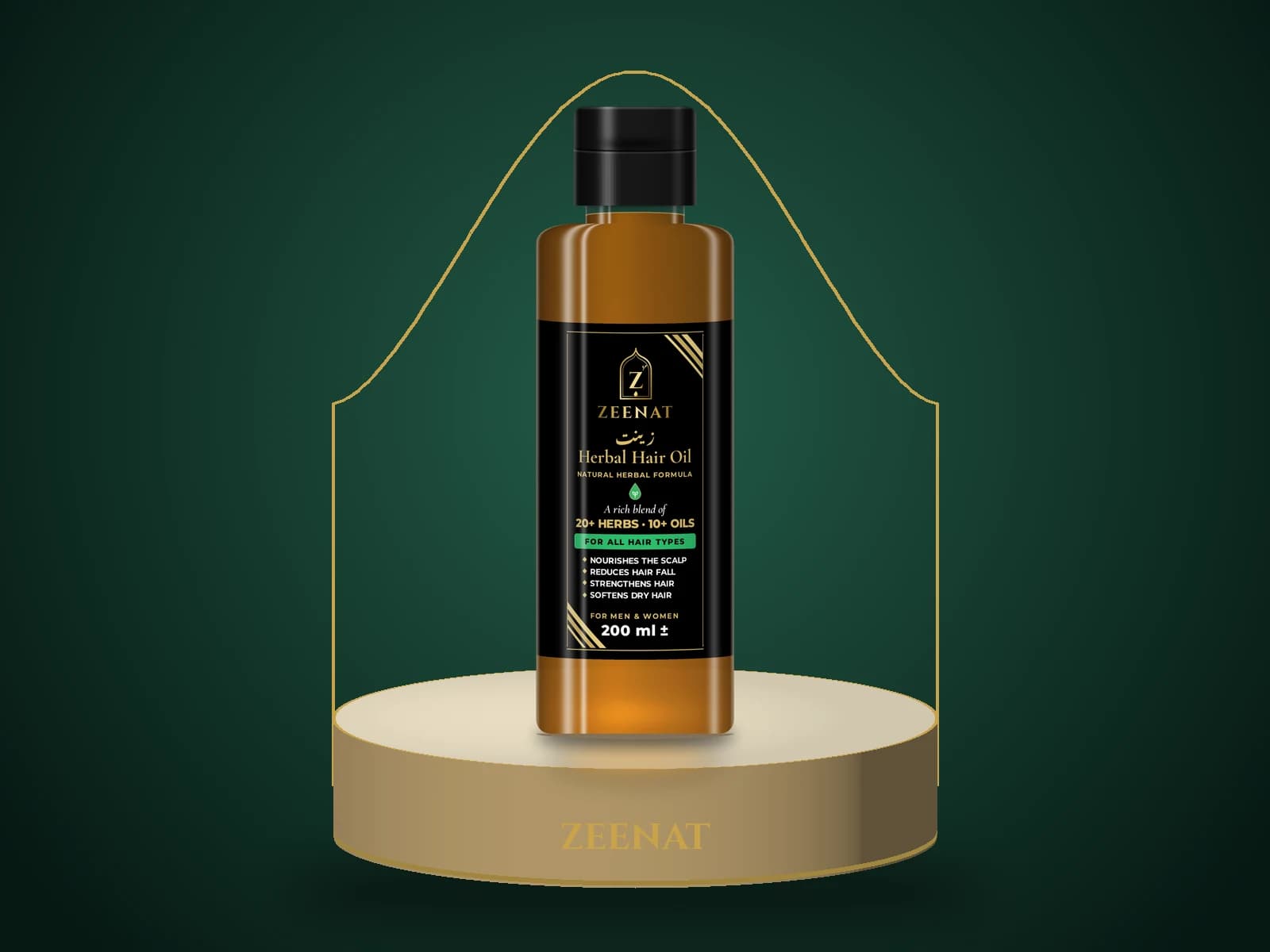
If your main problem is dryness, Zeenat Herbal Hair Oil is a rich blend of 20+ herbs (including traditional scalp herbs such as shikakai, reetha and mehndi) in 10+ oils that nourishes the scalp and softens dry hair. If you have true dandruff, use it the short way: before a wash, then wash it out. See the full ingredient list on the product page.
Chhote, safaid, khushk chhilke aksar sar ki khushki hote hain, jis mein tel bohat faida deta hai.
Chiknay, peelay chhilke dandruff hote hain. Is mein tel raat bhar na lagayein; dhone se sirf 30 se 60 minute pehle lagayein.
Anti-dandruff shampoo (ketoconazole ya zinc pyrithione) sar par 3 se 5 minute laga rehne dein, phir dhoyein. Ek mahine mein farq na pare to skin doctor ko dikhayein.
In short
- Small, dry, white flakes usually mean a dry scalp; greasy, yellowish flakes usually mean dandruff.
- For dandruff, an anti-dandruff shampoo (ketoconazole, zinc pyrithione, selenium sulphide) left on for 3 to 5 minutes works best.
- Heavy oil left on for long can make dandruff worse: oil 30 to 60 minutes before a wash instead.
- For a dry scalp, regular warm oiling is one of the best things you can do.
- Patch test desi remedies, dilute lemon and vinegar, and see a doctor if nothing improves in a month.
Frequently asked questions
Does hair oil cause dandruff?
Oil does not cause dandruff, but dandruff is linked to a scalp yeast that feeds on oil, so heavy oil left on the scalp for long can make it worse. If you have dandruff, oil 30 to 60 minutes before a wash and wash it out completely, instead of oiling overnight.
How can I tell dandruff from a dry scalp?
A dry scalp gives small, dry, white flakes and feels tight, often in winter. Dandruff gives larger, greasy, yellowish flakes that stick to the scalp, sometimes with redness and flaking on the eyebrows or behind the ears.
What is the best treatment for dandruff at home?
An anti-dandruff shampoo with ketoconazole, zinc pyrithione, selenium sulphide or salicylic acid, used 2 to 3 times a week and left on the scalp for 3 to 5 minutes before rinsing. Wash regularly, use lukewarm water and avoid scratching.
Which hair oil is good for a dry, flaky scalp?
A blend of several oils such as sesame, coconut, almond and olive oil with traditional herbs is good for a dry scalp. Zeenat Herbal Hair Oil is a blend of 20+ herbs in 10+ oils that nourishes the scalp. For true dandruff, use any oil only before a wash.
Is lemon good for dandruff?
Lemon is a popular home remedy, but undiluted lemon juice can sting and irritate, especially on a scratched scalp. If you use it, dilute it with water or dahi and rinse within 10 minutes. Stop if it burns.
When should I see a doctor for dandruff?
If there is no improvement after 4 weeks of using an anti-dandruff shampoo correctly, or if the scalp is very red, painful or weeping, has thick silvery patches, or shows patches of hair loss.
This article is general hair care information, not medical advice. For heavy, sudden or patchy hair loss, or a painful scalp, please see a dermatologist. Zeenat Herbal Hair Oil is a cosmetic product; results vary from person to person.
Keep reading
- How to Get Long, Thick-Looking Hair Naturally: An Honest Desi Guide
- Hair Fall in Men: An Honest Guide to Keeping Your Hair
- Hair Fall After Delivery: A Calm Guide for New Mothers
- Looking for a Rivaaj Mahal Hair Oil Alternative? How to Choose a Genuine Desi Herbal Oil
- Rosemary Oil for Hair: What It Really Does and How to Use It Safely
- Winter Hair Care in Pakistan: Keep Your Hair Soft All Season
- Hair Fall Treatment at Home: A Complete Guide for Pakistan
- How to Oil Your Hair the Right Way
- Best herbal hair oil in Pakistan: how to choose
- Current hair oil offers
- Zeenat Herbal Hair Oil